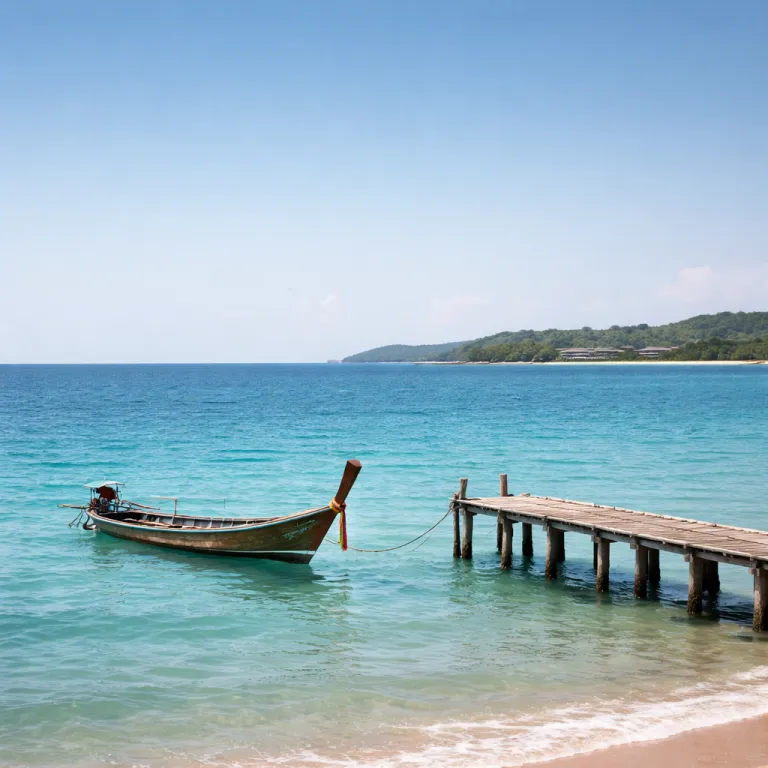
Why the longtail boat is the new private jet of the Andaman Sea
On a still morning off Phuket, the longtail boat moves slowly. Its wooden hull cuts a quiet line across the Andaman Sea while the city behind you shrinks into a soft blur of hills and high-rises. This is experiential luxury in Phuket as authentic travel, where the engine note of a traditional Thai boat replaces the hum of a private jet.
For years, luxury travel in southern Thailand meant speedboat transfers, champagne on arrival and a race between islands. Now the most interesting travelers are asking different things of Phuket, Thailand, and they are choosing longtail boats because they want to feel the spray, hear the captain’s stories and see the working beaches that never make the brochures. The global shift toward immersive, experience-led luxury in Phuket is visible in every harbor, where traditional Thai culture and modern comfort share the same plank.
Luxury longtail operators in Phuket have understood this change clearly. A luxury longtail boat is defined as “A traditional Thai boat upgraded with modern luxury amenities for private tours,” a description used by several local operators and regional travel guides, including the Phuket Expat Guide 2025. That single sentence captures how Phuket offers both heritage and high comfort, and it explains why the best experiences now sit somewhere between a fishing vessel and a private yacht.
Onboard, you still sit low to the water, close to the islands and limestone cliffs. Yet cushioned seating, shaded decks and curated food turn a simple transfer into a four hour experience that feels like a tasting menu of the Andaman Sea. The average cost of a private luxury longtail tour is approximately 2 500 THB for a half day, according to pricing collated in the Phuket Expat Guide’s 2025 update and rate cards from operators such as Phuket Dream Company and Seathern Luxury Phuket, which is a modest premium for travelers used to corporate rates and business class cabins.
For an executive extending a work trip, this is where Phuket high season finally makes sense. You can leave a meeting in Phuket Town, step into a waiting tuk tuk and be on a private longtail within an hour. That short journey from city boardroom to open water is the perfect Thailand reset, and it shows how travel in Phuket can fold real life and rare moments into the same day.
Traditional longtail boats once carried rubber, fish and families between islands. Today, operators such as Phuket Dream Company and Seathern Luxury Phuket work with local captains to offer private island hopping routes that still follow those old trade lines. The methods are modern, with safety equipment, navigation tools and onboard dining, yet the culture remains rooted in traditional Thai seamanship and the rhythms of southern Thailand’s tides.
For travelers used to polished lobbies, this kind of luxury culture can feel almost radical. You are not insulated from Thai culture by glass and marble; you are sitting beside it, watching squid boats, listening to stories about monsoon seasons and learning why certain beaches are sacred. As one Rawai-based captain explained in a 2024 Phuket Provincial tourism briefing, “Guests want to see how we really live on the water, not just the postcard view,” which is the essence of Phuket’s new experiential luxury approach to authentic travel and a key reason the longtail boat, not the speedboat, has become the quiet status symbol of the Andaman Sea.
Dawn at Rawai pier and night on the bay: Phuket’s hidden luxury hours
The most valuable hours in Phuket are not on any spa menu. They happen at dawn on Rawai fishing pier and again late at night when the squid boats switch on their green lights across the bay. These are the moments when Phuket’s experience-focused, authentic style of luxury stops being a slogan and becomes something you can feel on your skin.
Arrive at Rawai before sunrise and you will see why this working pier has become a quiet icon for luxury travel insiders. Fishermen unload the night’s catch while local families negotiate prices, and the air smells of salt, diesel and fresh Thai food being grilled on small carts. For travelers who usually move between airport lounges and hotel cars, this is one of the best things Phuket can offer: a direct line into the city’s living culture without any performance.
From here, a private longtail can take you out past the beaches and into the open Andaman Sea. You pass islands that most visitors only see from a distance, and your captain might suggest a stop at a tiny beach where the only things on the sand are shells and a shrine. This is island hopping as it should be in southern Thailand, slow and attentive, not a checklist of ten islands in one day.
Later, when the sun has dropped behind Phuket, Thailand’s hills, the same waters change character. Night squid fishing with local crews is one of the most quietly luxurious experiences in the region, because it replaces staged entertainment with real work and real stories. You sit under a simple canopy while the crew sets lines, and the only sounds are the engine, the water and the occasional tuk tuk echoing faintly from the city’s coastal road.
These hours are where the line between guest and observer softens. You might share a simple traditional Thai meal on deck, tasting menu style in miniature, with grilled squid, rice and a dipping sauce that carries the heat and sweetness of Thai culture. It is not plated fine dining, yet many executives tell local operators this is the meal they remember most from their trip, long after they have forgotten the hotel breakfast buffets.
Back on land, the same principle applies in Phuket Town’s old streets. Walk past the restored Sino Portuguese shophouses in the early evening and you will find street food stalls setting up beside design hotels and cocktail bars. For a deeper dive into this side of the city, our dedicated feature on mangrove kayaks, night markets and temple trails acts as a practical guide to the most rewarding things Phuket offers beyond the beach.
What unites these experiences is timing rather than price. You are paying with early mornings and late nights instead of only with your card, and that trade is what defines Phuket’s contemporary, experience-driven model of authentic luxury travel. In a region of beautiful beaches and polished resorts, the real luxury is often the decision to be awake when the city and the sea are at their most honest, a point echoed in Phuket Provincial statistics summaries that show sunrise and evening small-group excursions growing faster than standard daytime tours.
From street food to tasting menus: how Phuket’s kitchens are rewriting luxury
Phuket’s most interesting meals rarely happen under chandeliers. They unfold at plastic tables beside Sino Portuguese facades, on longtail decks at anchor and in small dining rooms where chefs translate southern Thailand’s recipes into multi course journeys. Food is where experiential luxury in Phuket becomes intensely personal, because every plate carries a story about place, people and tide.
Start with the street food. In Phuket Town, the best stalls are often run by families who have been cooking the same dishes for decades, serving noodles, curries and grilled seafood to office workers, tuk tuk drivers and visiting executives in rolled up shirts. Sharing that space is a form of luxury culture that no private dining room can replicate, and it gives you a direct connection to Thai culture that is both humble and profound.
At the other end of the spectrum, Phuket now hosts tasting menu restaurants that sit comfortably on any Southeast Asia itinerary. These kitchens work with local fishermen from Rawai, rubber plantations inland and small farms across southern Thailand to build menus that move from the Andaman Sea to the hills in a few courses. Our in depth review of the island’s Michelin starred and selected restaurants, including PRU, is available in the feature on Phuket’s evolving Michelin map, which is essential reading for serious gastronomic travel in Phuket.
Between these poles, hotels are finally catching up with what travelers want. Many of the best properties now offer guided market walks with their chefs, followed by cooking sessions that feel more like visiting a friend’s home than attending a class. You might start the day in a local market choosing herbs and fish, ride back in a tuk tuk and then spend the afternoon learning how to balance the sweet, sour and spicy notes that define traditional Thai dishes.
For business travelers used to room service, this shift is significant. Instead of eating alone after a long day in the city, you can join a small group in the hotel’s open kitchen or on a terrace overlooking the beach, turning a functional meal into a shared experience. This is luxury travel that values connection over spectacle, and it aligns perfectly with the broader move toward experiential, culturally grounded travel in Phuket.
Phuket’s position within Southeast Asia also matters here. Executives who split their time between Bangkok, Chiang Mai and regional hubs now see the island not only as a place for beaches but as a serious food destination in its own right. When you can move in a single trip from Chiang Mai’s mountain markets to Phuket’s Andaman Sea seafood, you begin to understand why many travelers now speak of a perfect Thailand itinerary built around kitchens rather than only around resorts.
Whether you are eating grilled fish on a pier, a refined tasting menu in a dining room or a simple bowl of noodles beside a busy road, the constant is authenticity. The most memorable things Phuket offers on the plate are not always the most expensive, but they are always rooted in local culture, ingredients and stories. That is the quiet revolution reshaping what luxury means at the table in Phuket, Thailand, and it is one that every serious traveler should taste at least once.
Designing a four night executive stay that balances boardroom and bay
For the business leisure traveler, time is the rarest currency. A four night stay in Phuket has to carry the weight of meetings, rest and meaningful experiences, which is exactly where Phuket’s experiential, authentic style of luxury travel proves its value. The goal is not to do all the things Phuket offers, but to choose a few that genuinely shift how you feel.
Day one is about arrival and orientation. Check into a property that understands both corporate needs and local culture, ideally somewhere between Phuket Town and the coast so you can move easily between city meetings and the beaches. Spend the evening walking through the old Sino Portuguese streets, tasting street food and letting the sounds of the city replace the noise of your inbox.
On day two, keep the morning for work in the city, then move deliberately toward the water. A late afternoon private longtail charter, arranged through a specialist such as Seathern Luxury Phuket or Phuket Dream Company, lets you leave the boardroom behind without losing the sense of structure executives often need. With typical private tours lasting around four hours for up to six people, based on Phuket Expat Guide data and operator schedules, you can be back at your hotel in time for a late dinner and still feel as if you have been away for days.
The third day is where you lean fully into the Andaman Sea. Use the morning for island hopping, choosing a route that balances quiet beaches with one or two better known islands so you can see both sides of Phuket, Thailand’s coastal identity. In the afternoon, visit a rubber plantation or a small village inland, where guides can explain how traditional Thai livelihoods intersect with the tourism economy and why sustainability now sits at the center of serious luxury travel planning.
Before you book, it is worth reading our analysis of whether Phuket’s luxury resorts can be genuinely sustainable. That piece unpacks the tension between high end comfort and environmental impact, and it will help you choose properties and experiences that align with your values. Experiential luxury in Phuket is not only about what you see, but about how your presence affects the places and people you visit.
On your final day, keep things simple. A quiet morning swim on one of the less crowded beaches, a last walk through Phuket Town for coffee and perhaps a final plate of noodles, then a tuk tuk ride back to your hotel to collect your bags. The point is to leave with a sense of rhythm rather than a list of attractions, because that rhythm is what will draw you back to southern Thailand when the next business trip appears on your calendar.
Throughout this stay, remember that Phuket sits within a wider Southeast Asia network of cities and islands. You might be flying in from Chiang Mai, Singapore or Hong Kong, but the island rewards those who slow down enough to feel its particular blend of city energy, coastal calm and deep culture. When you design your trip around longtail boats, fishermen’s piers and shared meals rather than only around infinity pools, you are not rejecting luxury; you are redefining it on Phuket’s own terms.
Key figures shaping Phuket’s longtail luxury shift
- Private luxury longtail tours in Phuket typically last around four hours for up to six passengers, which makes them ideal half day experiences for business travelers balancing meetings and leisure (data from the 2025 Phuket Expat Guide longtail charter section and published operator schedules).
- The average cost of a half day private luxury longtail experience is about 2 500 THB, positioning it as a premium yet accessible upgrade over standard group excursions for most international visitors (pricing compiled from Phuket Expat Guide and published rate cards from major operators).
- Luxury longtail experiences operate year round across Phuket’s harbors, reflecting sustained demand for personalized, culturally rooted travel rather than only peak season beach holidays (compiled from regional tourism briefings and Phuket Provincial statistics summaries, which report steady month-on-month bookings).
- Operators increasingly combine traditional Thai boat design with modern safety equipment, comfortable seating and onboard dining, illustrating how cultural heritage and contemporary luxury can coexist on the Andaman Sea (based on local operator specifications and safety disclosures, including compliance with Thai Marine Department regulations).
- Growing interest in experiential, authentic luxury travel in Phuket aligns with broader global trends toward personalized, sustainable tourism, which industry analysts identify as one of the fastest expanding segments in high end hospitality worldwide (referenced in recent UNWTO and WTTC outlook reports on premium travel behavior).