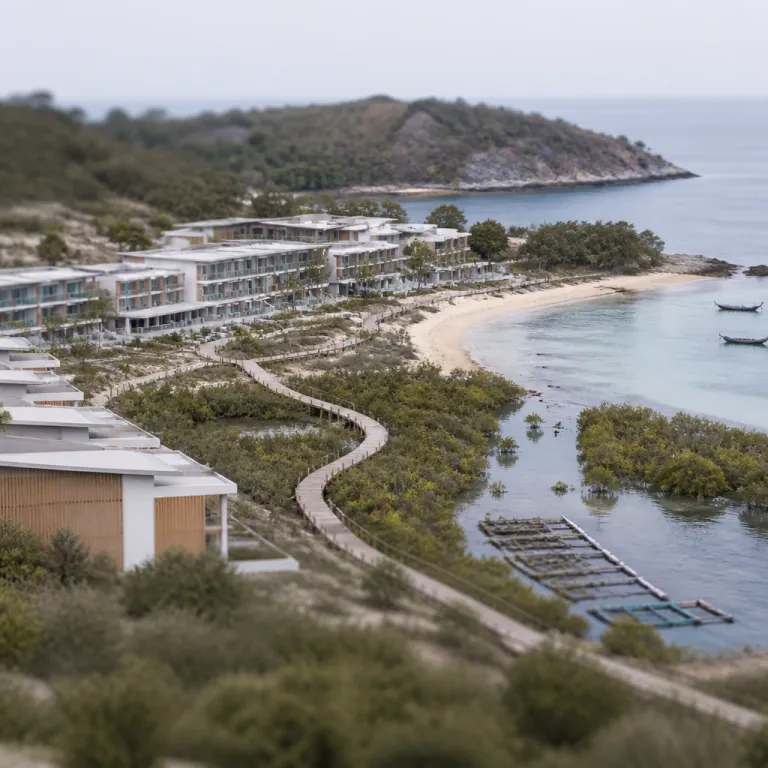
Why the Phuket Model is reshaping luxury travel tourism
The Phuket Model is the Thai government’s clearest signal that mass tourism on the island has reached its limit. Prime Minister Srettha Thavisin initiated the phuket model tourism reform 2026 to overhaul tourism management, social security and land use after Phuket welcomed around five million visitors in a single year. As one official summary puts it, “The Phuket Model aims to revolutionize tourism management and social security in Phuket.”
This reform is happening now because tourism pressure, illegal operators and land encroachment have started to threaten both conservation and guest experience. The government and its international partners want Phuket tourism to move from volume to value, with a focus on sustainable operations that protect the land and marine ecosystems around Sirinat National Park and the Andaman Sea. For luxury travelers, this means that the key question is no longer whether a hotel has an infinity pool, but whether its travel services in Phuket align with the island’s new sustainable standards.
The Phuket Model was unveiled in april and is being rolled out in phases, with a dedicated équipe from Thai government agencies, local businesses and consular missions coordinating implementation. Policy reforms target everything from illegal land concessions to safety standards in Patong nightlife venues, while infrastructure investment focuses on the overloaded Phuket airport and the congested road network to Phuket town. For couples planning international travel, the phuket model tourism reform 2026 will increasingly shape where the best hotel options cluster, how they operate and what kind of Phuket experience they can credibly promise.
For guests booking premium stays, one immediate impact is stricter vetting of operators involved in travel tourism activities such as yacht charters, dive boats and overland transfers. Authorities want to prevent Phuket from becoming a haven for so called safety tourism, where visitors arrive mainly to exploit lax rules rather than enjoy Thailand’s culture and coastline. The expected result is a more coherent ecosystem in which high end hotel properties, licensed guides and conservation focused excursions work together to deliver safer, more sustainable services in Phuket for international visitors.
Luxury travelers who care about Thai tourism policy will notice that the Phuket Model is designed as a prototype for the wider Andaman region. Officials have already signaled that once the phuket model tourism reform 2026 is bedded in, its framework will extend to Phang Nga and Krabi, creating a connected corridor of higher quality travel experiences. For couples planning a multi stop itinerary, this means that a stay in Phuket can be paired with new generation eco conscious retreats in Phang Nga without sacrificing comfort or service standards.
For a sense of how this shift in phuket tourism quality already plays out at the top end, look at the new wave of five star international excellence in premium hotel booking experiences in Phuket described on this in depth guide to high end stays. These properties are aligning with the government’s sustainable agenda by investing in waste water treatment, reef safe amenities and low impact land use. When you compare options, prioritize hotels whose teams can explain their conservation partnerships and who are transparent about how they comply with the Phuket Model’s safety and environmental rules.
From airport to Patong bay: what the new transport era means
Transport is the most tangible part of the phuket model tourism reform 2026 for many visitors, especially those heading straight to Patong. At peak times, the road transfer from Phuket airport to Patong can stretch beyond two hours, eroding the sense of arrival that luxury travelers expect. Under the Phuket Model, a new Boat Taxi service will connect Patong to the airport area by sea in around thirty minutes, turning a frustrating commute into a scenic glide along Phuket’s west coast.
This Boat Taxi route is more than a convenience play ; it is a strategic move to reduce congestion, emissions and land pressure along the main highway between Phuket international airport and Phuket town. By shifting part of the travel tourism flow onto the water, the government aims to cut journey times while easing the strain on local communities who live along the current transfer corridor. For couples arriving on international flights, this means that the first chapter of their Phuket experience will likely be a quiet crossing past headlands and fishing villages rather than a crawl through traffic.
The transport overhaul sits alongside plans for a new international airport to relieve capacity constraints at the existing Phuket airport, which has struggled to keep pace with global demand. For high end travelers, the combination of a second airport and the Boat Taxi will create more predictable arrival windows, which in turn allows hotels to refine their services in Phuket around guaranteed check in times and smoother private transfers. When you book, ask your hotel’s concierge team whether they integrate the Boat Taxi into their arrival experience and how they coordinate luggage handling from terminal to pier.
These changes also reshape the map of where it makes sense to stay, especially for short breaks. Properties in Patong and along the western coastline will benefit first from the Boat Taxi, making them strong candidates for travelers who want quick access from Phuket international arrivals without sacrificing beach proximity. Over time, as the phuket model tourism reform 2026 extends to Phang Nga, resorts north of the island will also plug into this upgraded network, giving couples more flexibility to split their stay between Phuket and quieter bays across the provincial border.
For now, if you are planning a three or four night escape, consider how your chosen hotel leverages the new transport ecosystem rather than simply its distance from the airport on a map. A property that coordinates timed Boat Taxi slots, private car back up and late check out will deliver a smoother overall travel experience than one that leaves you to negotiate transfers alone. This is where the Phuket Model’s focus on integrated services in Phuket becomes a real differentiator for discerning guests who value time as much as design.
As the government’s infrastructure team rolls out these upgrades, expect booking platforms to start flagging which hotels are Boat Taxi ready and which still rely solely on road transfers. For couples comparing options, this will be a key filter, especially during the high season when Phuket tourism peaks and road congestion returns. The phuket model tourism reform 2026 is, in that sense, not just a policy document but a new lens through which to read every line of a hotel’s access and transfer description.
Beach restoration, conservation and where to book next
Beyond transport, the Phuket Model is quietly redrawing the coastline, with direct implications for where luxury travelers should book. Authorities are removing abandoned structures, enforcing land encroachment rules in and around Sirinat National Park and reorganizing commercial activities on key beaches. For guests, this means that some stretches of sand will feel more open, more natural and more aligned with the sustainable ambitions of the phuket model tourism reform 2026.
Areas with strong conservation frameworks, such as the protected zones near Mai Khao and Nai Yang, are likely to become benchmarks for how Thai tourism can balance high end hotels with fragile ecosystems. When you evaluate a property, look at how it talks about conservation, including mangrove restoration, reef monitoring or partnerships with local communities who depend on the land and sea. A serious hotel will be able to explain how its operations fit into the Phuket Model’s environmental guidelines, from waste management to limits on motorized water sports.
These shifts are already influencing where new luxury openings cluster, with developers looking beyond Patong to quieter headlands and to the mainland shores of Phang Nga. For couples who want to stay ahead of the curve, it is worth reading about Khao Lak’s quiet renaissance and the new luxury addresses of Phang Nga province, which sit squarely in the future expansion zone of the Phuket Model. As the phuket model tourism reform 2026 extends north, these retreats will benefit from the same safety, infrastructure and conservation standards that are now being enforced on Phuket itself.
Within Phuket, expect the most visible changes over the next few seasons in zones where illegal land use has been most aggressively challenged. Some long standing venues may disappear, while hotels that comply with the new rules will gain clearer sightlines, quieter beaches and a more coherent public realm. For travelers, this is the moment to favor properties that have invested early in sustainable design and that work closely with the government’s implementation team rather than those clinging to the old model of unregulated expansion.
Booking platforms that specialize in premium stays, such as the curated collections highlighted in this feature on redefining luxury and premium hotel booking experiences in Phuket, are starting to filter for alignment with the Phuket Model. They look at data points such as energy use, staff training, safety certifications and engagement with local conservation projects. For couples, using these filters is a practical way to ensure that their travel tourism choices support the long term future of Phuket tourism rather than undermining it.
Over the coming years, as the Phuket Model matures and the new international airport opens, the island will feel less like a free for all and more like a curated archipelago of distinct zones, each with its own character and environmental commitments. Phuket town will continue to evolve as a cultural hub, while the west coast refines its mix of nightlife in Patong and low key bays further south. For travelers who care about both comfort and impact, aligning hotel choices with the phuket model tourism reform 2026 is the most reliable way to enjoy Thailand’s most famous island while helping to secure its future.