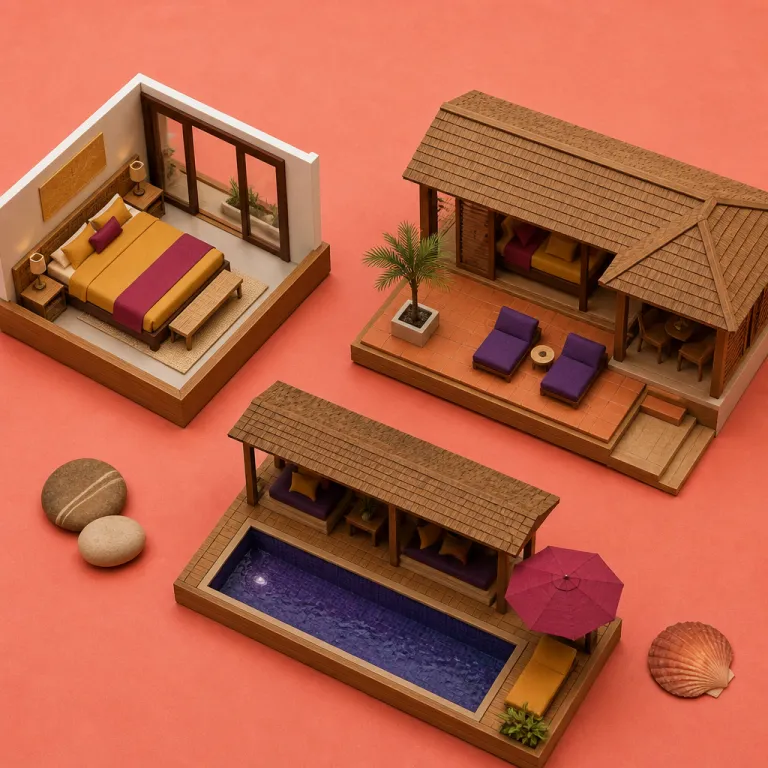
Hotel phuket region review: decoding room categories across the island
Every serious review of hotels in the Phuket region now starts with one challenge: understanding what each room category really means. In Phuket Province, a so‑called Pavilion at one resort might mirror a full Villa at another, while a Junior Suite elsewhere feels closer to a standard Phuket hotel room with better cushions. When you compare hotels across the island, the naming is branding, but the real story lies in square metres, layout and how close you are to the beach or the road.
Across luxury properties in this province, Suites often average around 70–90 square metres, Villas frequently reach 140–170 square metres and Pool Pavilions sit near 90–110 square metres. These ranges are drawn from publicly available floor plans and booking pages at resorts such as Trisara (Ocean View Pool Suite, Ocean View Pool Villa), Rosewood Phuket (Ocean View Pool Pavilion, Beachfront Pool Villa) and Anantara Layan (Deluxe Layan Suite, Beachfront Pool Villa), where room sizes are clearly listed in square metres. That scale difference matters for couples choosing between a compact suite above Patong Beach nightlife or a sprawling private villa near Rawai Beach mangroves. When you scan any hotel review for Phuket, focus less on poetic labels and more on hard data: size, terrace depth, pool length and distance to the main swimming pool or the shoreline.
Major resort groups along Kata Beach, Karon Beach and Kamala Beach use different hierarchies, so a Deluxe Pool Access room at one beach resort can feel more indulgent than a so‑called Villa facing the car park at another. In Patong, a high‑rise property might call its top category a Penthouse Suite, while a quieter resort near Bang Tao or Mai Khao simply says Villa but delivers a walled garden, a private pool and outdoor sala. A credible Phuket hotel write‑up will always translate these names into lived experience for guests: how it feels at sunrise, how much noise seeps in and how far you walk to the first coffee.
Hidden‑gem properties scattered between Kata, Karon and Rawai often blur the lines further, especially when they market beach hotels with only a handful of high‑end keys. Some list every room as a Suite, yet the entry category may just be a slightly larger hotel room with a balcony that glimpses Khao Beach or Tao Beach rather than front‑row sand. When you read island hotel reviews, look for specifics about the view angle, the floor level and whether the terrace is genuinely private or shared with neighbouring guests.
In Phuket Town, heritage‑style hotels use more traditional wording, but the same logic applies: a Suite might simply mean a sitting area added to a standard footprint. A thorough regional review will compare these urban suites with coastal villas, explaining why a smaller but quieter room above a courtyard can feel more luxurious than a larger space facing Patong traffic. For couples, the smartest move is to shortlist three or four resorts, then email each hotel directly to request floor plans and exact room locations before you commit.
Suite, villa, or pool pavilion: what you really get in Phuket
Choosing between a Suite, a Villa or a Pool Pavilion in Phuket is less about labels and more about how you travel as a couple. One guideline from local luxury resorts such as Sri Panwa and The Shore at Katathani is clear: villas typically offer more space and private pools. That single sentence should anchor any in‑depth Phuket accommodation review you trust, especially when you are weighing privacy against proximity to the main pool and restaurants.
Suites in many beach hotels around Kata Beach, Karon Beach and Patong Beach usually sit in the main building, stacked above the central swimming pool or gardens. They suit guests who like to be close to the lobby, the breakfast buffet and the spa, accepting that corridors and lifts mean less of a private retreat. When reviewers mention a good rating for a Suite category, read carefully whether that praise comes from couples who enjoy social energy or from travellers who value quiet corners.
Villas, by contrast, tend to spread out along the coastline or into the hills behind Kamala Beach, Bang Tao and Mai Khao, often with walled gardens and a private plunge pool. These villa clusters can feel like a separate resort within the resort, ideal for guests who want to hear cicadas rather than bar playlists, but they may sit farther from the main beach or the largest pool. A thoughtful write‑up of Phuket’s luxury stays will flag whether golf buggies, shaded paths or steep stairs connect your villa to the sand.
Pool Pavilions occupy a middle ground, especially in properties near Kata, Rawai and Khao Beach where land is tighter and design more vertical. You often gain direct pool access or a compact private pool, but the overall footprint stays closer to a large Suite than a full Villa, which suits couples who want water at their doorstep without paying for a huge garden. When comparing guest feedback, look for comments on how much sun the pavilion pool receives and whether neighbouring terraces overlook your deck.
In more intimate resorts around Rawai Beach and Tao Beach, the same category names can hide very different experiences, so context is everything. A Pool Pavilion facing the Andaman may feel utterly secluded, while another near Patong Beach might sit above a busy swim‑up bar, which changes the mood entirely. For romantic trips, prioritise categories that combine a private outdoor area with enough distance from the main swimming pool, even if that means stepping down one level from the most expensive villa on the list.
Couples planning coastal ceremonies often pair this room category decision with venue research, especially when reading a Phuket hotel review focused on weddings. If you are exploring intimate coastal venues, this guide to Phuket wedding escapes and hidden coastal gems helps align your Suite or Villa choice with the ceremony setting. Matching your room type to your celebration spot ensures that your private retreat feels like an extension of the beach or headland where you say your vows.
Views, pools, and placement: reading between the lines of room descriptions
Room descriptions in Phuket Province are full of tempting phrases: pool access, private pool, garden view, partial sea view. A serious regional hotel review will decode each term, because the difference between pool access and a genuinely private pool can define your stay. In many resorts near Patong Beach or Karon Beach, pool access simply means you step from your terrace into a long shared swimming pool that snakes past several rooms.
For couples who like to meet other guests, these pool access rooms can be a good compromise, especially when the resort offers free non‑motorised water toys or happy hour at the swim‑up bar. Privacy, however, is limited: neighbours may float past your sunbed, and children often treat the waterway as a lazy river. When you read reviews, check whether travellers mention noise levels at night and how early the pool opens, because that affects your morning coffee ritual.
A private pool, by contrast, usually sits within a walled courtyard or on a high terrace, particularly in villas around Bang Tao, Mai Khao and Kamala Beach. Here, you control the soundtrack, whether it is cicadas, waves or silence, and you can swim without sharing the water with other guests. Any in‑depth write‑up of Phuket’s villa resorts that values seclusion will highlight these units as ideal for honeymoons or milestone anniversaries, even if the official rating of the property matches cheaper hotels closer to Patong.
Garden view is another phrase that deserves scrutiny, especially in hotels across Phuket where landscaping varies dramatically. In some beach resorts, garden view means lush frangipani and palms between your terrace and the sea, while in others it can mean a strip of lawn beside the access road or a service path. When you compare feedback, look for photos taken from the bed or sofa, not just from the balcony rail, to understand what you will actually see.
Placement within the resort matters as much as the label, which is why experienced travellers study site maps before booking. A base category room on the third floor, set back from Patong Beach but away from the road, can feel calmer than a higher category room directly above the main pool speakers. To time your booking and potential upgrades, consult this analysis of the booking window that saves you money on Phuket luxury hotels, then combine that pricing intelligence with a close reading of room placement notes.
Finally, remember that proximity to Phuket Airport, Phuket Town or specific beaches like Kata Beach, Rawai Beach and Khao Beach shapes your daily rhythm. A resort ten minutes from the terminal at Mai Khao offers easy arrivals but fewer dining options beyond the property, while a hotel in Kata or Patong keeps you close to nightlife but farther from quieter coves. The best long‑form reviews of Phuket accommodation will always balance these trade‑offs, explaining how room category, view and location intersect for different styles of trip.
Suites versus villas for couples: privacy, amenities, and hidden gems
For couples, the Suite versus Villa decision in Phuket is rarely simple, because both promise comfort but deliver it differently. Suites in a large resort near Patong Beach or Karon Beach often come with instant access to multiple restaurants, a big central swimming pool and a concierge desk that can arrange island hopping before breakfast. Villas near Rawai Beach, Bang Tao or Kamala Beach, on the other hand, trade that bustle for private gardens, outdoor showers and the sense that you have your own small beach resort within the larger property.
When you read any Phuket hotel review aimed at romantic travellers, pay attention to how the writer describes movement through the property. If they mention walking past three pools and two bars to reach the sand, you are likely in Suite territory, where vertical towers and long corridors define the experience. If they talk about winding paths, individual gates and staff arriving by buggy, you are in villa country, where each guest space feels more like a standalone home.
Hidden gems often sit between these extremes, especially in less‑hyped corners of the province such as Khao Beach or the headlands between Kata and Karon. Here, a small cluster of villas might share one infinity pool and a quiet restaurant, giving you the intimacy of a villa stay with just enough shared space to feel part of a discreet community. Reviews that highlight these properties usually come from guests who value low‑key luxury: good linen, strong coffee, and the sound of longtail boats rather than DJ sets.
From a value perspective, a top‑tier Suite in a high‑demand Patong hotel can cost as much as an entry‑level villa near Mai Khao or Bang Tao. The difference lies in what you want from your days: if you plan to spend hours at Patong Beach clubs and in Phuket Town restaurants, a central Suite with a good rating and reliable service may be smarter. If you dream of late breakfasts by your private pool and sunset walks on a quiet stretch of sand, the villa wins every time.
Couples who care about sustainability should also consider how each category interacts with the landscape, especially in more fragile coastal zones. Villas with large private pools and air‑conditioned living rooms consume more resources than compact Suites, which raises questions about long‑term impact on Phuket’s beaches and mangroves. For a deeper look at this tension, read this analysis of the green hotel paradox in Phuket’s luxury resorts and then decide how your room choice aligns with your values.
Ultimately, the most useful reviews for couples will not simply declare Suites or Villas superior. Instead, they map specific properties to specific travel styles, pointing you toward a hotel in Kata for active days in the surf, a quiet villa near Rawai Beach for slow mornings or a hillside hideaway above Kamala Beach for cinematic sunsets. Your task is to read those accounts with your own habits in mind, then choose the category that supports the way you actually live on holiday.
When to upgrade: smart strategies for room categories and families
Upgrading room categories in Phuket is both art and timing, especially for families balancing budgets with comfort. A thoughtful regional hotel guide will explain when a move from a base room to a Suite, from a Suite to a Pool Pavilion or from there to a Villa genuinely changes your experience. The key is to understand which upgrades buy you more space, which buy you a better view and which simply add decorative flourishes.
For couples, upgrading from a standard room to a Suite in a busy Patong or Kata hotel often secures a separate sitting area and a larger balcony. That extra space matters if one guest wakes early to work or read while the other sleeps, or if you plan in‑room breakfasts overlooking Patong Beach or Kata Beach. Reviews that praise these Suites usually mention not just size but how the layout allows each person to move quietly without disturbing the other.
Families face a different calculus, especially in resorts around Bang Tao, Mai Khao and Khao Beach where land allows for generous footprints. Interconnecting rooms can be a good solution for older children, giving everyone privacy while keeping doors open at night, but they rely on availability and can scatter you across different floors. Two‑bedroom Suites or Villas guarantee proximity and often include a private pool, which transforms afternoons into relaxed family time without competing for loungers at the main swimming pool.
When you read reviews from family guests, look for comments on noise transfer between rooms, the safety of terrace railings and how close the category sits to kids’ clubs or shallow pools. A regional write‑up that simply notes a good rating without these details is not enough for parents who need practical information. In Phuket Province, where many resorts stretch from the road to the beach, the exact placement of your family unit can mean the difference between peaceful naps and constant corridor traffic.
Timing your upgrade also matters, especially in high‑demand periods when Phuket Airport arrivals surge and last‑minute changes become expensive. Booking a lower category early, then politely asking about paid upgrades at check‑in, can yield better value than locking in the top tier months ahead. Loyalty programmes sometimes offer free or discounted upgrades, so mention your membership when you contact the hotel directly and ask which room types are most likely to be available.
For those who like to plan with precision, combine a trusted long‑form review of Phuket hotels with direct communication: email the reservations équipe, request floor plans and ask which categories interconnect. Clarify whether your chosen Suite or Villa sits closer to the beach, the main pool or the road, and how far it is from breakfast. This level of detail may feel meticulous, but in a destination where resorts can span several hundred metres from lobby to sand, it is the surest way to align your upgrade with how your family actually travels.
Practical booking intelligence: reading reviews and talking to the hotel
In a destination as layered as Phuket, the difference between a good stay and a great one often comes down to how you read reviews and how you talk to the hotel. A reliable write‑up of Phuket accommodation will separate emotional reactions from structural facts: room size, orientation, distance to the beach and the nature of the pool. Your job is to extract those facts, then verify them directly with the property before you commit.
Start by scanning multiple reviews for consistent patterns rather than isolated complaints, especially around noise, privacy and service. If several guests mention that pool access rooms near Patong Beach feel exposed to foot traffic, believe them and adjust your expectations or category choice. If others repeatedly praise the quiet of villas near Rawai Beach or Bang Tao despite the resort’s size, that is a strong signal that layout has been thoughtfully designed.
Next, move from public reviews to private communication, because only the hotel can confirm current floor plans and room placements. Email the reservations équipe with specific questions: ask which Suite categories face the sea, which Villas have fully private pools and which Pool Pavilions sit closest to the main swimming pool. Mention that you have read a detailed regional review and want to match its descriptions to current inventory, which signals that you are an informed guest.
When comparing hotels across Phuket, remember that a similar star rating can mask very different experiences, especially between Patong, Kata and Kamala Beach. One resort might earn a good rating for its lively atmosphere and central location, while another scores well for quiet seclusion and attentive service, even if both sit on the same stretch of sand. Align those reputations with your own preferences: nightlife near Patong Beach for some, slow mornings near Khao Beach or Mai Khao for others.
Also consider logistics such as transfer time from Phuket Airport, access to Phuket Town restaurants and how easily you can reach different beaches. A hotel in Kata or Patong keeps you close to surf schools and dining, while a property near Mai Khao or Bang Tao offers faster airport runs but fewer independent eateries. The best long‑form reviews of Phuket stays will spell out these trade‑offs, but you should still confirm transport options and approximate travel times with the concierge.
Finally, keep an eye on value rather than headline prices alone, especially when comparing Suites, Villas and Pool Pavilions. A slightly cheaper category with a better orientation toward the beach or a quieter corner of the resort can feel more luxurious than the official top tier. By combining careful reading of reviews with direct, specific questions to the hotel, you turn a complex menu of room categories into a tailored choice that reflects how you actually want to live in Phuket.
Hidden gems in the Phuket region: where room categories punch above their weight
Beyond the marquee names on Patong Beach and Karon Beach, the Phuket region hides smaller resorts where room categories quietly over‑deliver. These properties often sit along Kata Beach, Rawai Beach, Bang Tao or Kamala Beach, where the coastline bends into coves and the mood softens. A sharp regional review will spotlight them not for flashy branding but for the way their Suites, Villas and Pool Pavilions interact with the landscape.
On Kata’s southern headland, for example, some resorts position entry‑level Suites high on the cliff, giving them better views than mid‑tier rooms closer to the beach but partially blocked by palms. Guests who read reviews carefully and choose these base categories often enjoy sunsets that rival those from the official top‑tier villas, at a lower nightly rate. Here, the hidden gem is not the category name but the floor and orientation, which only detailed reviews and site maps reveal.
Around Rawai and Tao Beach, low‑rise resorts sometimes cluster Pool Pavilions around quiet courtyards rather than along the main swimming pool. This layout creates pockets of calm where couples can enjoy semi‑private water without the cost of a full villa, while still being a short walk from the beach and local seafood shacks. In regional review terms, these pavilions often earn praise from guests who value both privacy and a sense of place, hearing fishing boats rather than bar playlists at night.
Farther north near Mai Khao and Khao Beach, larger resorts use their generous land to spread villas along the tree line, giving even mid‑tier categories direct garden access and partial sea breezes. Families who choose two‑bedroom villas here often comment in reviews that they spent more time together on the terrace than at the main pool, because the private space felt so comfortable. For couples, a one‑bedroom villa in these zones can feel like a secluded beach resort, even when the property counts hundreds of keys.
In Phuket Town, hidden‑gem hotels trade sea views for cultural immersion, offering Suites that open onto Sino‑Portuguese courtyards and café‑lined streets. A regional review that includes these urban stays alongside coastal resorts helps travellers design split itineraries: a few nights in town for food and galleries, then a longer stretch by the beach. In this context, a well‑placed Suite above a quiet lane can feel as luxurious as a villa, especially for guests who measure value in experiences rather than pool length.
Wherever you stay in Phuket Province, the most rewarding hidden gems share one trait: their humbler room categories often deliver more than the label suggests. By reading reviews with an eye for specifics, asking the right questions and staying open to less famous beaches, you can secure a Suite, Villa or Pool Pavilion that feels like a personal upgrade without paying for the most expensive name on the list. That is the real art behind any honest assessment of hotels in this part of Thailand.
Key figures for choosing suites, villas, and pool pavilions in Phuket
- Average Suite size in Phuket luxury resorts is around 70–90 square metres, according to published floor plans from properties such as Rosewood Phuket and The Nai Harn, which typically suits couples who value shared hotel amenities over expansive private gardens.
- Average villa size in the region is close to 140–170 square metres, offering almost double the space of a Suite and usually including a private pool, which aligns with the guideline that villas typically offer more space and private pools.
- Average Pool Pavilion size sits near 90–110 square metres, placing it between Suites and villas and making it a practical compromise for couples who want direct water access without paying for a full villa footprint.
- Standard check‑in times at Phuket luxury resorts cluster around 15:00, with check‑out near 12:00, as stated by brands such as Banyan Tree Phuket, JW Marriott Phuket and Keemala, so guests arriving on early flights to Phuket Airport should plan for luggage storage or request early access to their chosen room category.
- Rising demand for private pools and beachfront locations across Phuket Province has pushed many resorts to expand villa and Pool Pavilion inventories, which means more choice for guests but also more complex room hierarchies to decode.
FAQ: suites, villas, and pool pavilions in the Phuket region
What is the main difference between a Suite and a Villa in Phuket
The main difference between a Suite and a Villa in Phuket is space and privacy: Suites average about 70–90 square metres and usually sit within the main hotel building, while villas often reach around 140–170 square metres, stand alone and typically include a private pool and garden. Villas suit guests who prioritise seclusion and outdoor living, whereas Suites work well for travellers who want quick access to shared amenities. When reading a detailed review of Phuket hotels, check whether the writer emphasises corridor living or individual gates and paths, because that signals which category they are describing.
Are Pool Pavilions suitable for families travelling to Phuket
Pool Pavilions can be suitable for families, especially those with older children who are confident swimmers, because they offer generous space and direct water access. Many resorts in Phuket Province design these pavilions with semi‑private pools or shared lagoons, so parents should read reviews carefully to understand safety features and visibility from the bedroom to the water. For younger children, interconnecting rooms or two‑bedroom villas with fully walled private pools often provide a safer and more controllable environment.
Do all Villas in Phuket luxury resorts have private pools
Not all villas in Phuket luxury resorts have private pools, even though many do, so it is essential to confirm details before booking. Some properties label larger garden units as villas without adding a pool, reserving water features for higher categories such as Pool Villas or Pool Pavilions. A careful regional review will specify which villa types include pools, but you should still verify this directly with the resort’s reservations équipe.
When is it worth paying for a private pool instead of pool access
Paying for a private pool is worth it if you value seclusion, quiet and the ability to swim at any hour without sharing the space. Couples on honeymoons or milestone trips often find that a private pool transforms their stay, especially in quieter areas like Mai Khao, Bang Tao or Rawai Beach. If you enjoy a more social atmosphere and plan to spend most of your time at the main swimming pool or beach, a pool access room in a well‑reviewed resort may offer better value.
How far in advance should I book my preferred room category in Phuket
For peak seasons and high‑demand categories such as villas with private pools or ocean‑facing Pool Pavilions, booking several months in advance is wise. This lead time increases your chances of securing specific placements, such as top‑floor Suites or villas closest to the beach, which often sell out first. Combine early booking with flexible upgrade strategies at check‑in, as highlighted in many in‑depth reviews of Phuket hotels, to balance certainty with potential savings.