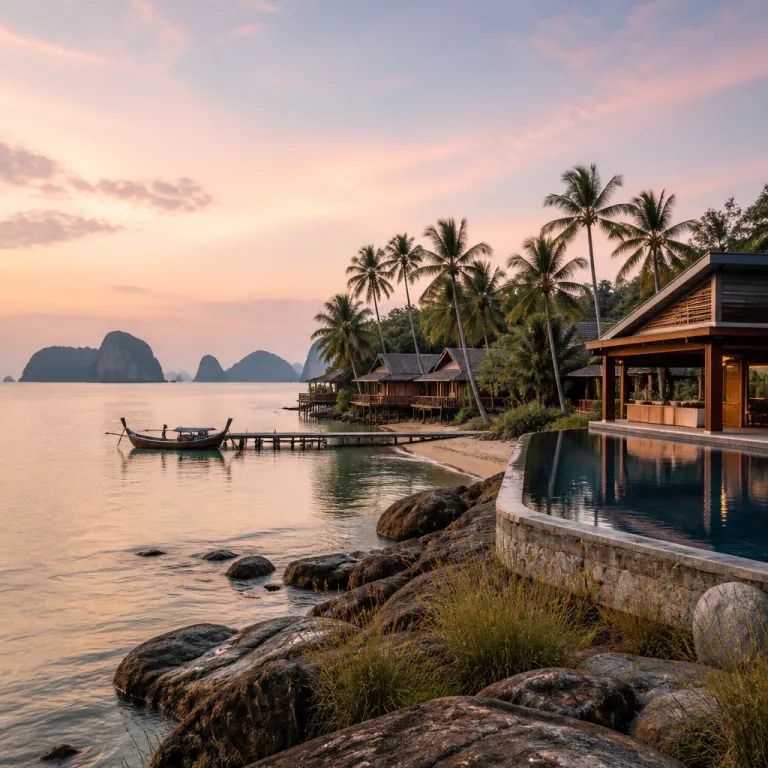
Koh Yao Noi: a discreet luxury island between Phuket and Krabi
Why Koh Yao Noi feels like a private island for discerning travellers
Koh Yao Noi sits quietly in Phang Nga Bay, between Phuket and Krabi. This island in Thailand offers a rare mix of understated luxury, local life, and calm beaches that feel far removed from the busier Thai islands. For travellers seeking the best balance between comfort and authenticity, Koh Yao Noi opens a window onto a slower, more gracious way to travel.
The island of Koh Yao Noi covers around 50 square kilometres, with about 12,000 residents, many from long-established Muslim families who still fish and farm rice (sources: Tourism Authority of Thailand regional briefs; Phang Nga provincial statistics). Their presence shapes the character of the place: the call to prayer, the scent of grilled fish, and the sight of water buffalo grazing all frame your day by the sea. When you visit Koh Yao Noi, you are not just on an island resort; you are stepping into a living community that welcomes respectful guests.
Luxury hotels on Koh Yao Noi tend to be low-rise, hidden in coconut groves or perched above the bay, rather than towering over the beaches. From many infinity pools, your eyes travel across Phang Nga Bay, with its limestone karsts rising from the sea like sculptures. This is where the island escape concept becomes real: you feel close to nature, yet your hotel service remains polished, attentive, and quietly efficient.
Time on Koh Yao Noi moves differently, and that is part of its appeal. A typical day might start with sunrise yoga facing Phang Nga Bay, followed by a slow breakfast of Thai fruit and fresh coffee. Later, a private boat can take you past nearby Koh Yao Yai and other islands in Thailand, before you return to your hotel terrace for a final drink under the stars.
For guests comparing Koh Yao Noi with more famous Thai islands, the difference is clear. Phuket offers energy, nightlife, and shopping, while Koh Yao Noi focuses on space, silence, and the soft sounds of the sea. As one long-term boat captain explained to a guest, “People come here to hear the wind, not the speakers.” If you value privacy, meaningful local contact, and the feeling that the island is almost yours alone, this may be your best choice in the wider Phuket–Krabi region.
Choosing the right luxury hotel on Koh Yao Noi for your style of stay
High-end accommodation on Koh Yao Noi ranges from intimate island resort hideaways to larger properties with full spa and wellness facilities. Many hotels face the eastern side of the island, where the beaches look directly onto Phang Nga Bay and its dramatic limestone cliffs. When you choose your hotel, think first about how you want to spend each day, then match that rhythm to the setting.
Some of the best-known luxury addresses, such as Cape Kudu Hotel, sit close to the main pier, making transfers by boat from Phuket or Krabi especially smooth. From these locations, you can walk or cycle to small cafés, local markets, and the modest mosque that anchors village life. Other hotels are more secluded, reached by a short drive along the island roads, which gives a stronger sense of retreat and makes the Koh Yao Noi landscape feel wonderfully remote.
To compare styles, consider a few contrasting examples. Cape Kudu Hotel offers a boutique, Mediterranean-influenced design with around 50 rooms and suites, convenient for guests who like to stroll to cafés after dinner. By contrast, Six Senses Yao Noi spreads its private pool villas across a forested hillside, with butler service, a strong wellness focus, and higher nightly rates that reflect its more exclusive positioning. TreeHouse Villas on neighbouring Koh Yao Noi’s sister island, Koh Yao Yai, adds an adults-only, romantic treehouse concept that appeals to honeymooners seeking dramatic views and extra privacy.
Room categories on Koh Yao Noi often include pool villas, sea-view suites, and garden pavilions, each designed to maximise the sense of space and privacy. When a hotel describes itself as an island resort, look closely at how many rooms it offers, how spread out they are, and how close they sit to the beaches. The best properties integrate natural materials, soft lighting, and open-air bathrooms that let the sounds of the sea drift in at night.
Service style on Koh Yao Noi and neighbouring Koh Yao Yai tends to be warm and personal, with staff often coming from local villages. Dress modestly when you move beyond the hotel grounds, as the island community is predominantly Muslim and appreciates respectful clothing. This cultural awareness is part of what makes this corner of Thailand feel different from some other islands in Thailand, and it deepens the quality of your stay.
Many luxury hotels on Koh Yao Noi now emphasise sustainability, from filtered water systems to support for eco-friendly homestay programmes in nearby villages. Guests can join guided walks that explain how local families balance fishing, rice farming, and tourism to protect the island environment. For travellers interested in conservation-focused experiences across the region, it is worth reading a dedicated article on conservation experiences worth booking in Phuket before finalising their travel guide and hotel choices.
When comparing options, use a simple guide: if you want easy access to cafés and the pier, choose a hotel near the main village, while if you prefer total quiet, select a property further along the coast. Either way, the combination of refined service, gentle Thai hospitality, and the ever-present sea views makes Koh Yao Noi one of the most appealing addresses in the wider Phuket–Krabi area.
Hidden beaches, bays, and sea experiences around Koh Yao Noi
The coastline of Koh Yao Noi is shaped by tides, mangroves, and long curves of sand that change character through the day. Some beaches are wide and swimmable at high tide, while others reveal sandbanks and mudflats when the sea retreats. Understanding this rhythm helps you choose the best beach for each time of day and for each mood.
On the eastern side of the island, several small beaches face directly into Phang Nga Bay, offering sunrise views that many guests consider the highlight of their stay. From here, long-tail boats and speedboats depart for boat trips into the bay, weaving between limestone towers and stopping at tiny coves where the sand feels almost untouched. These excursions often include snorkelling stops, where the clear sea opens a window onto coral gardens and schools of tropical fish.
The western coast of Koh Yao Noi feels more rural, with mangrove forests, fishing piers, and views back towards Phuket and the open Andaman Sea. Here, the beaches are less about classic postcard beauty and more about the sense of space, wind, and sky, especially at low tide. Cycling along these quiet roads, you pass buffalo, rubber plantations, and small Thai houses, gaining a deeper insight into the island’s everyday life.
For guests who want to explore beyond Koh Yao Noi, many hotels can arrange private boat trips that combine Koh Yao Noi, Koh Yao Yai, and smaller islets in a single day. These routes often include stops at sandbars that appear only at certain times, making the experience feel both exclusive and ephemeral. When planning such a day with your concierge, ask about the best time for calm seas and soft light, as this can transform your photographs and your memories.
Evenings on Koh Yao Noi are quiet, with most activity centred around hotel restaurants and a few relaxed beach bars. If you are drawn to the magic of the sea after dark, consider extending your itinerary to include specialised experiences such as bioluminescent paddles and night dives in the Andaman. Combining these with the calm of Koh Yao Noi and the gentle charm of southern Thailand creates a layered, memorable journey through the islands of Thailand.
Cultural etiquette and local life on Koh Yao Noi
Life on Koh Yao Noi is shaped by a predominantly Muslim community, with many families engaged in fishing and rice farming. Visitors are welcome, but the island’s character remains firmly rooted in local traditions and religious practice. Respecting this context is essential if you want your travel to feel both ethical and enriching.
Dress modestly when you leave your hotel, especially when passing through villages, visiting markets, or walking near the mosque. Lightweight long trousers, skirts below the knee, and covered shoulders are appreciated, particularly for women, and they also protect you from the sun during the hottest time of day. Swimwear belongs on the beaches and by the hotel pool, not in village streets or at the pier where local residents conduct their daily business.
Many luxury hotels on Koh Yao Noi and Koh Yao Yai now collaborate with local guides to offer cultural experiences that go beyond standard boat trips. You might join a fishing family at dawn, learn how rice fields are managed through the seasons, or cycle with a guide who explains how the island balances tourism with conservation. These encounters deepen your sense of place and make the island feel less like a backdrop and more like a shared home.
When you visit Koh Yao Noi, simple gestures carry weight: greeting people with a smile, learning a few Thai phrases, and asking permission before taking photographs all build trust. Buying snacks or handicrafts from small shops near the pier or in roadside stalls supports the local economy in a direct, tangible way. This approach aligns with the island’s goal to promote sustainable tourism and preserve both its natural beauty and its culture.
Alcohol is available in many hotels, but it is discreetly handled out of respect for local customs, and you should avoid public displays of drunkenness in village areas. Noise levels drop early, and the night sky often feels remarkably dark and star-filled compared with Phuket or other Thai islands. For travellers who value this quieter rhythm, Koh Yao Noi becomes one of the clearest examples of how luxury and local life can coexist gracefully in Thailand.
Planning your journey: from Phuket or Krabi to Koh Yao Noi
Reaching Koh Yao Noi is straightforward, yet it still feels like a small adventure. Most travellers arrive via Phuket or Krabi, then transfer by boat across Phang Nga Bay to the island. This short sea journey sets the tone for your stay, as the skyline of Phuket recedes and the limestone towers of the bay rise ahead.
From Phuket, boats to Koh Yao Noi usually depart from piers such as Bang Rong, with both public long-tail boats and private speedboats available. The crossing typically takes between 30 and 60 minutes, depending on the type of boat and sea conditions on the day (sources: local pier timetables; regional port and cruise guides for Koh Yao Noi). From Krabi, similar services operate from piers around Tha Lane, offering an alternative route that can be convenient if you are combining Koh Yao Noi with other islands in Thailand.
When booking through a luxury hotel or a premium travel guide, transfers are often fully coordinated, including car pick-up from your Phuket or Krabi hotel and seamless handover at the pier. This door-to-door service is particularly valuable after a long flight, as it removes uncertainty about schedules, luggage, and payment. Many high-end properties on Koh Yao Noi also arrange direct speedboat transfers, which shorten travel time and add a sense of privacy to your arrival.
It is wise to carry some cash, as ATMs on Koh Yao Noi are limited and may not always be convenient to your hotel location. Card payments are widely accepted in luxury hotels and many restaurants, but small shops, local cafés, and some boat operators still prefer cash for everyday transactions. Planning this detail in advance ensures that your first day on the island focuses on the sea, the beaches, and the view, rather than on practicalities.
Weather patterns in this part of Thailand follow a clear rhythm, with a drier season from November to April and a wetter period from May to October. Each season has its charms: calmer seas and clearer skies in the dry months, lusher landscapes and fewer visitors in the rainy time. Whatever your choice, coordinate with your hotel concierge about the best time of day for boat transfers, as early morning or late afternoon crossings often offer the smoothest seas and the most beautiful light over Phang Nga Bay.
Designing a refined itinerary: how to spend three days on Koh Yao Noi
A well-planned three-day stay on Koh Yao Noi allows you to experience both the island’s quiet beaches and its surrounding seascape. On your first day, settle into your hotel, walk along the nearest beach, and let your senses adjust to the slower rhythm. As the sun sets over Phang Nga Bay, enjoy a Thai dinner that highlights local seafood, fragrant herbs, and the gentle heat of southern cuisine.
On the second day, dedicate your time to the sea with a curated boat trip arranged by your hotel or a trusted travel guide. A typical route might include Koh Yao Noi, Koh Yao Yai, and several smaller islets, with stops for snorkelling, swimming, and picnics on hidden beaches. Ask your guide or boat captain to time the journey with the tides, so that sandbars and shallow lagoons appear at just the right moment for photographs and quiet exploration.
The third day can focus on the interior of Koh Yao Noi, where cycling and scooter rides reveal rubber plantations, rice fields, and small villages. Many hotels now offer experiences under names such as Senses Yao, designed to engage all five senses through food tastings, spa rituals, and guided walks. These programmes help you feel the island in a more layered way, from the scent of lemongrass in a massage oil to the sound of birds at dawn.
Throughout your stay, balance activity with rest, allowing time simply to sit on your terrace and watch the sea change colour. For guests who wish to combine Koh Yao Noi with other refined stays in the region, it is worth consulting a curated selection of elegant beachfront resorts in Phuket for a refined island stay. This pairing lets you enjoy both the quiet of Koh Yao Noi and the broader dining and shopping options of Phuket without sacrificing comfort.
As you refine your itinerary, remember that the most memorable experiences often come from unplanned moments: a conversation with a boat captain, a sudden clearing of clouds over Phang Nga Bay, or a solitary walk along a nearly empty beach. Allow space in your schedule for these small surprises, and Koh Yao Noi will reward you with memories that feel both luxurious and deeply personal. In this way, the island becomes not just a stop between Phuket and Krabi, but a central chapter in your journey through the islands of Thailand.
Key figures and practical statistics for Koh Yao Noi travellers
- Koh Yao Noi covers around 50 square kilometres, making it large enough for varied landscapes yet small enough to explore comfortably by scooter or bicycle in a few days (source: regional port and cruise guides for Koh Yao Noi; Phang Nga provincial planning documents).
- The island is home to approximately 12,000 residents, which supports a genuine local community and ensures that tourism remains only one part of the economic mix (source: provincial and expat guides for the Phuket and Phang Nga area; Tourism Authority of Thailand summaries).
- Boat transfers from Phuket or Krabi typically take between 30 and 60 minutes, depending on whether you choose a public long-tail boat or a private speedboat, which allows easy same-day connections with international flights (source: local pier schedules and operator information).
- The destination is accessible year-round, with a drier season from November to April and a wetter season from May to October, so travellers can plan according to their preference for calmer seas or greener landscapes.
- Eco-tourism, cycling tours, and homestay-style experiences are all growing on Koh Yao Noi, reflecting a regional trend towards more sustainable, low-impact travel in Phang Nga Bay and the wider Phuket–Krabi area.
Frequently asked questions about Koh Yao Noi
How do I get to Koh Yao Noi from Phuket or Krabi?
To reach Koh Yao Noi, you take a boat from Phuket or Krabi, usually from piers such as Bang Rong near Phuket or Tha Lane near Krabi. Public long-tail boats and private speedboats both operate these routes, with crossings typically lasting between 30 and 60 minutes. Many luxury hotels can arrange combined car and boat transfers, which simplifies the journey after a long flight.
What is the best time of year to visit Koh Yao Noi?
The best time for most travellers is during the drier season from November to April, when seas are generally calmer and skies clearer. The rainy season from May to October brings more showers but also fewer visitors, greener landscapes, and often lower hotel rates. Your choice should depend on whether you prioritise smooth boat trips and sunshine or quieter beaches and softer light.
Are there ATMs and basic services on Koh Yao Noi?
There are a few ATMs on Koh Yao Noi, mainly near the main village and pier, but they are limited in number and may not always be convenient to your hotel. It is wise to carry some cash for small shops, local cafés, and tips, while using cards for hotel bills and higher-end restaurants. Basic services such as pharmacies, small supermarkets, and fuel stations are available, but the island does not feel commercialised.
Is Koh Yao Noi suitable for families seeking a luxury stay?
Koh Yao Noi works very well for families who value space, calm, and nature-focused activities. Many luxury hotels offer family villas, shallow pools, and gentle beaches, along with boat trips that can be tailored to children’s ages and swimming abilities. The quiet roads, friendly local community, and absence of loud nightlife make the island particularly appealing for multi-generational trips.
What should I wear and how should I behave in local villages?
Because the island community is predominantly Muslim, visitors should dress modestly in villages, markets, and near the mosque, covering shoulders and knees where possible. Swimwear should be kept to hotel pools and beaches, and public displays of drunkenness or loud behaviour are best avoided. Simple politeness, a few Thai greetings, and asking permission before taking photographs go a long way towards building respectful connections with residents.